

How NGOs Get CSR Funding in India – Complete Guide (2026)

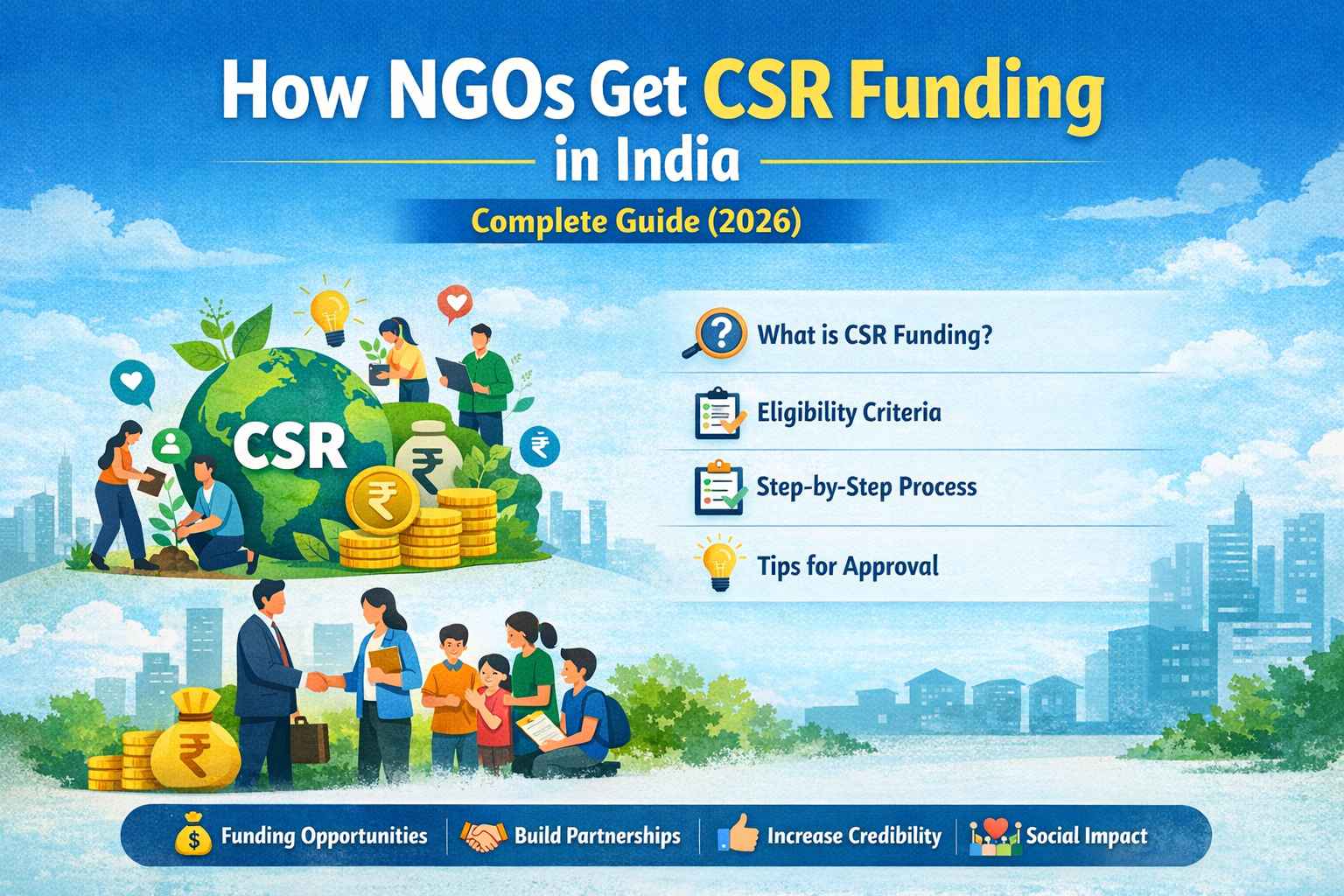
How NGOs Get CSR Funding in India – Complete Guide (2026)
Corporate Social Responsibility (CSR) funding has become one of the most important financial sources for NGOs in India. With companies legally required to spend a portion of their profits on social welfare activities, NGOs now have a strong opportunity to secure funding and expand their impact.
This guide explains how NGOs can get CSR funding in India, including eligibility criteria, required registrations, and proven strategies to improve approval chances.
What is CSR Funding?
CSR (Corporate Social Responsibility) is a legal responsibility of certain companies in India to contribute towards social development. Under the Companies Act, eligible companies must spend 2% of their average net profits on CSR activities.
NGOs act as implementation partners for these companies by executing projects in areas such as education, healthcare, environment, and social welfare. This makes NGOs an essential part of the CSR ecosystem.
Starting a Non-Governmental Organization (NGO) in India is one of the most effective ways to contribute to social welfare and bring positive change to society. Whether your goal is to work in education, healthcare, environment, or poverty eradication, setting up an NGO legally is the first and most important step.
In this guide, we will explain the complete NGO registration process in India, required documents, types of NGOs, and important compliance requirements in simple and easy language.
Who Can Get CSR Funding?
Not every NGO is automatically eligible for CSR funding. To receive CSR funds, an organization must meet specific requirements and maintain proper compliance.
An NGO must be registered as a Trust, Society, or Section 8 Company. It is mandatory to have CSR-1 registration, which allows the NGO to legally receive CSR funds. Additionally, the organization should have a proven track record of social work, proper documentation, and compliance with legal requirements.
Having 12AB and 80G registration is not mandatory but highly recommended, as it increases credibility and trust among companies. NGOs that fail to meet compliance standards or lack proper documentation may face rejection.
Step-by-Step Process to Get CSR Funding
Getting CSR funding requires a structured and professional approach. Following the right process can significantly improve your chances of success.
Step 1: Complete CSR-1 Registration
CSR-1 registration is mandatory for NGOs that want to receive CSR funding. It registers your organization with the Ministry of Corporate Affairs and makes you eligible to partner with companies for CSR projects.
Step 2: Build a Strong NGO Profile
A well-prepared NGO profile plays a crucial role in attracting corporate partners. Your profile should clearly explain your mission, vision, and the impact your organization has created.
It should include details of past projects, achievements, impact reports, and information about your team. A strong and professional profile builds trust and increases your chances of getting selected by companies.
Step 3: Prepare a Detailed Project Proposal
A clear and well-structured project proposal is one of the most important factors in securing CSR funding. Companies prefer NGOs that present realistic and result-oriented plans.
Your proposal should include the objective of the project, target beneficiaries, budget, timeline, and expected outcomes. A detailed proposal helps companies understand the impact and feasibility of your project.
Step 4: Approach Companies
After completing your preparations, the next step is to connect with companies that offer CSR funding. NGOs can approach companies through direct communication, CSR portals, corporate websites, and networking events.
It is important to target companies whose CSR goals match your NGO’s mission. A relevant approach increases the chances of approval.
Step 5: Maintain Proper Compliance
Compliance is a key factor in both receiving and maintaining CSR funding. NGOs must ensure timely filing of annual returns, proper income tax compliance, and transparent use of funds.
Organizations with strong compliance records are more likely to receive continuous and repeat funding from companies.
Documents Required for CSR Funding
To apply for CSR funding, NGOs must keep all necessary documents ready and updated. Proper documentation helps in building trust and speeds up the approval process.
The essential documents include NGO registration certificate, PAN card, CSR-1 registration certificate, 12AB and 80G certificates, audit reports, bank account details, and a well-prepared project proposal.
Tips to Increase Chances of CSR Funding
Securing CSR funding is competitive, so NGOs must follow smart strategies to stand out.
Focusing on measurable impact is very important, as companies prefer organizations that can show real results. Maintaining transparency in financial records and operations builds long-term trust.
Building relationships with corporate CSR teams through networking and communication can open new opportunities. NGOs should also align their projects with popular CSR sectors like education, healthcare, environment, and women empowerment.
Most importantly, staying compliant with legal requirements ensures credibility and improves funding chances.
Common Mistakes to Avoid
Many NGOs fail to secure CSR funding due to avoidable mistakes. Not having CSR-1 registration is one of the most common issues. Submitting weak or unclear project proposals can also lead to rejection.
Lack of transparency, ignoring compliance requirements, and incomplete documentation are other major reasons why NGOs miss out on funding opportunities. Avoiding these mistakes can significantly improve success rates.
Benefits of CSR Funding for NGOs
CSR funding provides multiple advantages that help NGOs grow and create a larger impact. It offers financial support for social projects and helps build long-term partnerships with companies.
It also increases the credibility and visibility of the organization. With proper funding, NGOs can expand their activities, reach more beneficiaries, and create meaningful change in society.
Conclusion
CSR funding is a powerful opportunity for NGOs in India to scale their operations and increase their social impact. However, success depends on proper registration, strong documentation, and a strategic approach.
By completing CSR-1 registration, maintaining compliance, building a strong profile, and presenting professional proposals, NGOs can significantly improve their chances of securing CSR funding.
📞 Need Help with CSR Funding?
Start your NGO funding journey with expert guidance and professional support.
👉 Get assistance for CSR-1 registration, documentation, and funding strategy today.
Start Your NGO Journey Today – Talk to an Expert!
We are ready to answer right now! Sign up for a consultation.
I consent to the processing of personal data and agree with the user agreement and privacy policy